How to Make Mocktails That Taste Like Real Cocktails: The 5-Part Method
How to turn any cocktail into a mocktail that still tastes like a proper drink: the five things alcohol does, what to swap in for each (tea, verjus, shrubs, tonic, salt), and four worked examples.
Every recipe on this site comes two ways, and this is the method behind the zero-proof half. Most mocktails taste like juice because they simply leave the alcohol out. But alcohol isn’t just “booze.” It does five specific jobs in a drink, and when you remove it, you have to replace each one. Do that, and a mocktail tastes like a proper cocktail.
The Five Things Alcohol Does (and What Replaces Each)
What alcohol does
What it feels like
What to use instead
Heat
A warming burn on the tongue and throat
Fresh ginger, a slice of chili, black pepper
Bitterness & dryness
Stops a drink tasting sweet
Black tea, tonic, grapefruit, non-alcoholic bitters
Body
Weight and texture in the mouth
Strong tea, a little extra syrup, coconut water, aquafaba foam
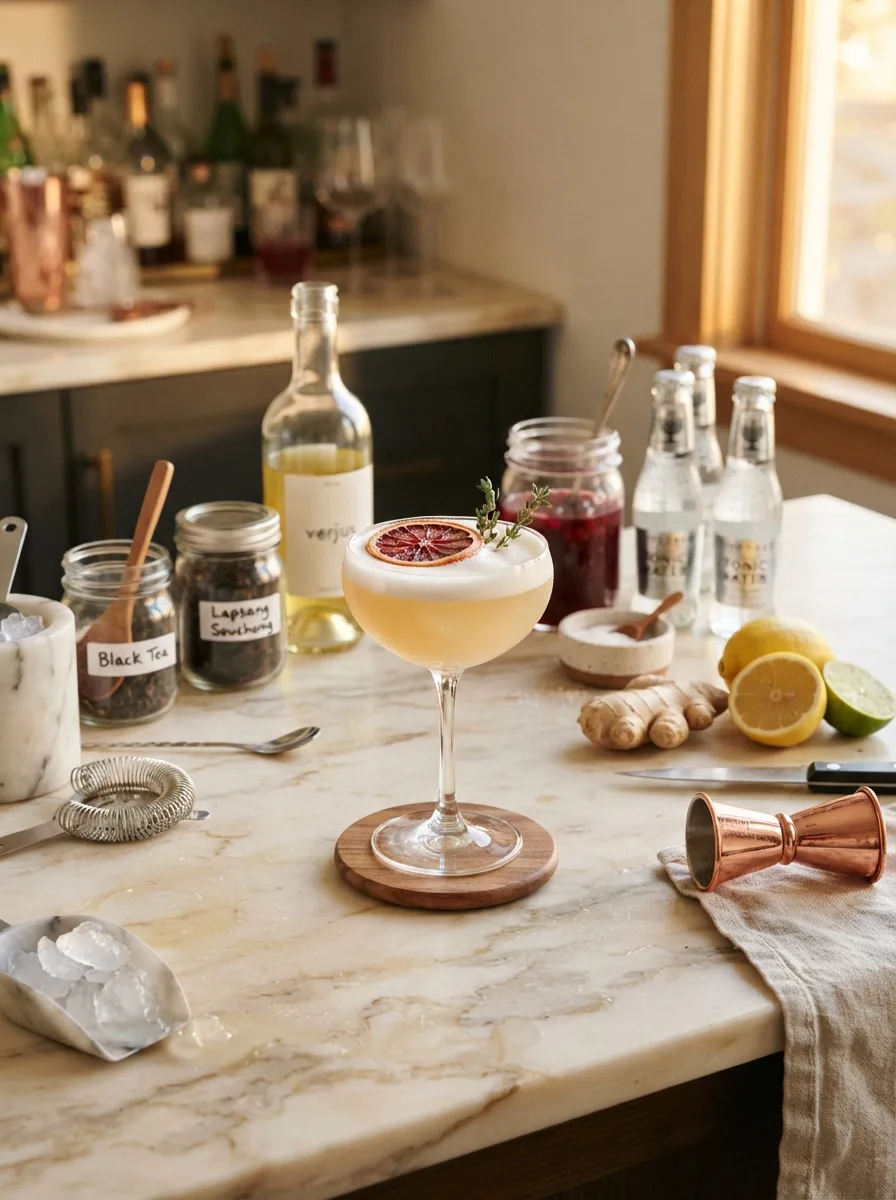
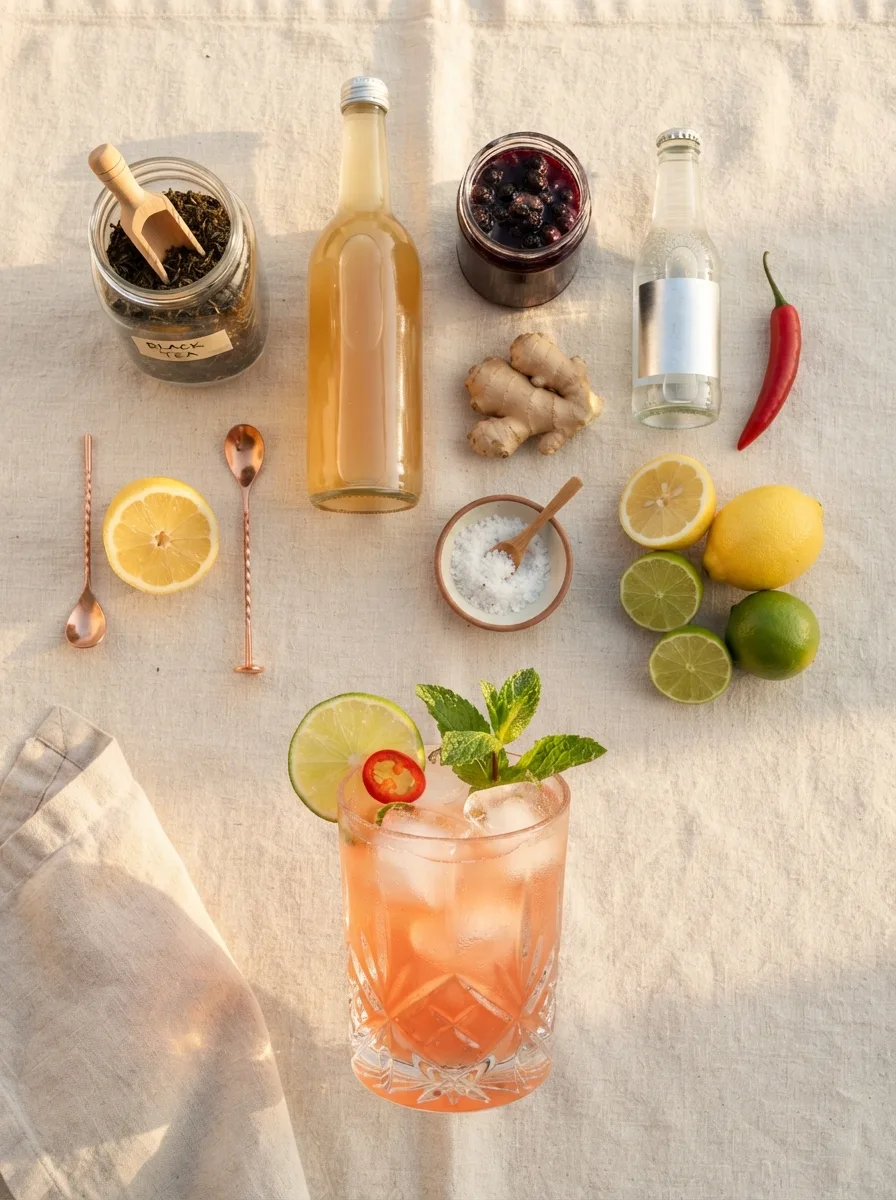
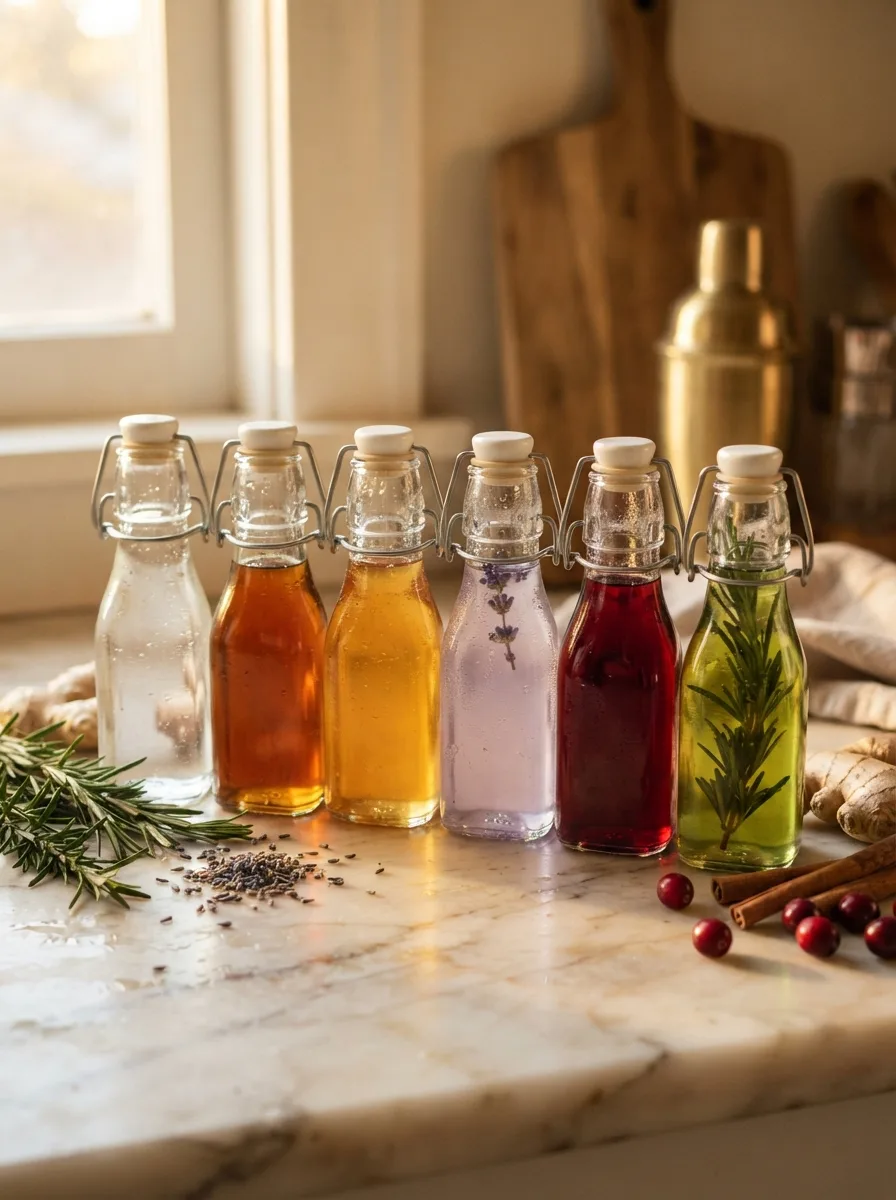
The zero-proof toolkit: tea, verjus, shrub, tonic, ginger, chili, and salt.
The one ingredient to always have: strong black tea
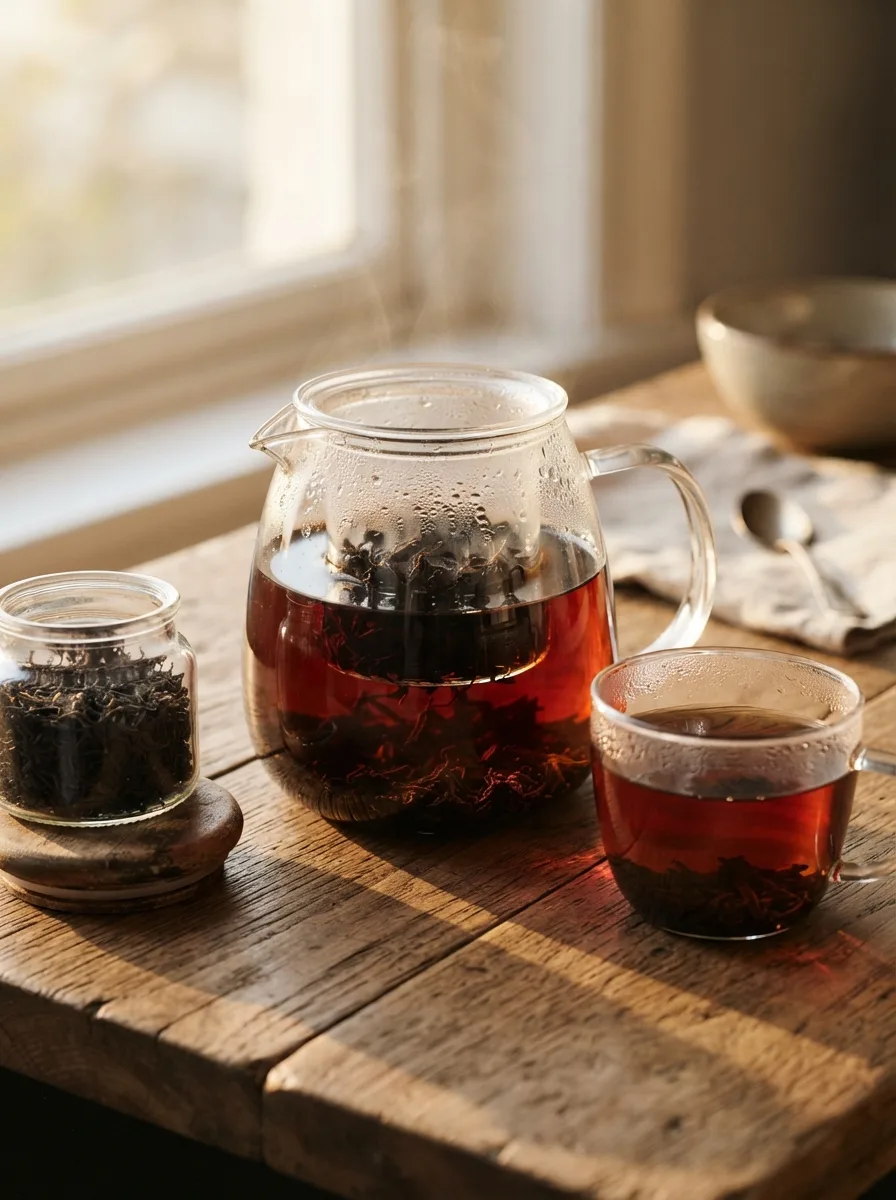
If you learn one swap, make it this: replace the spirit one-for-one with strongly brewed, chilled black tea (brewed, chilled)Black tea (brewed, chilled)Adds the tannin and dryness zero-proof drinks usually lack. Use decaf for kids or late nights.. Brew it at double strength (two bags per cup), steep 5 minutes, and chill. Its tannin gives the drying grip and body a spirit provides. A little smoky lapsang souchong mimics whiskey barrels or mezcal. Use decaf for kids and late nights.
Strong black tea is the single most useful zero-proof ingredient: it adds tannin and body.
Example 1: The Penicillin (Heat + Smoke)
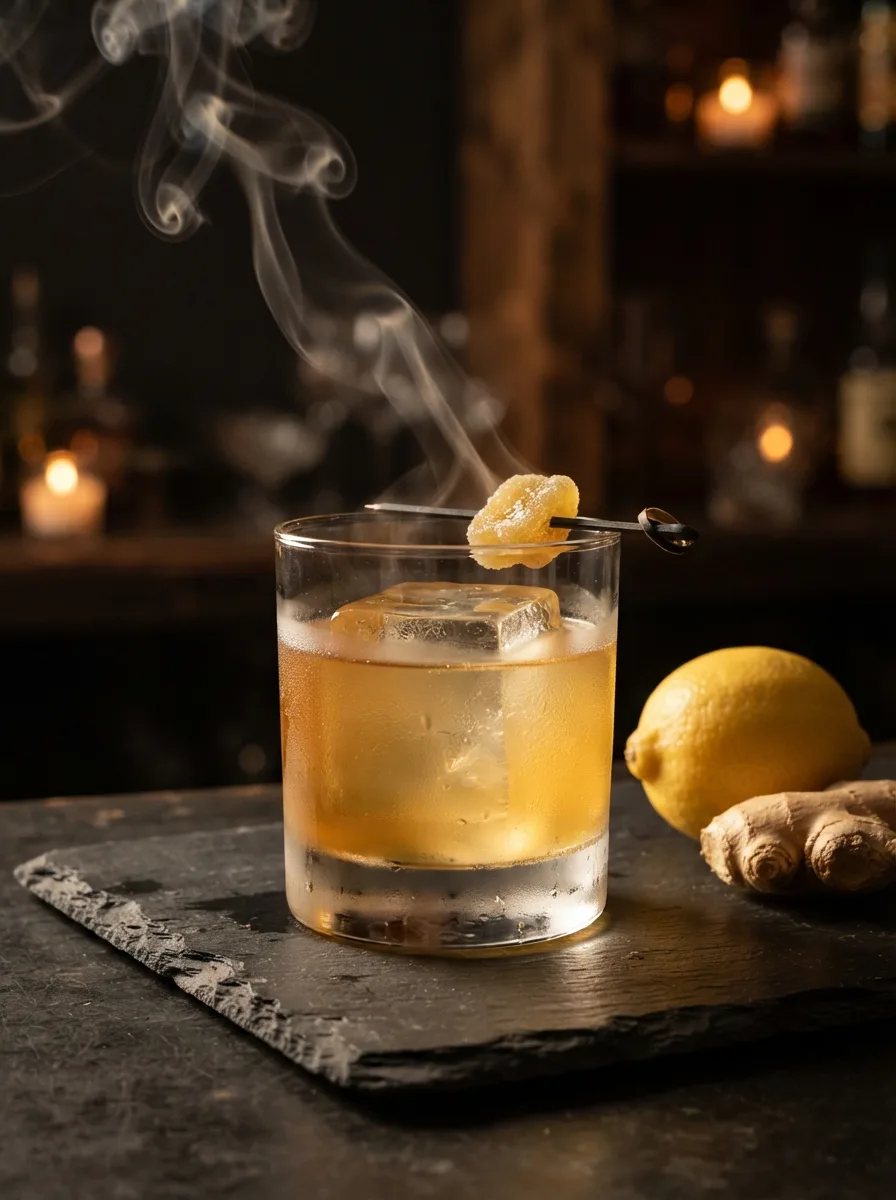
The Penicillin is scotch, lemon, and honey-ginger syrup with a smoky float, a modern classic. Its zero-proof twin shows the whole method at once: black tea for the scotch, a little lapsang for the smoke, fresh ginger for the burn, and a pinch of salt.
The Penicillin: honey, lemon, ginger, and a smoky float.
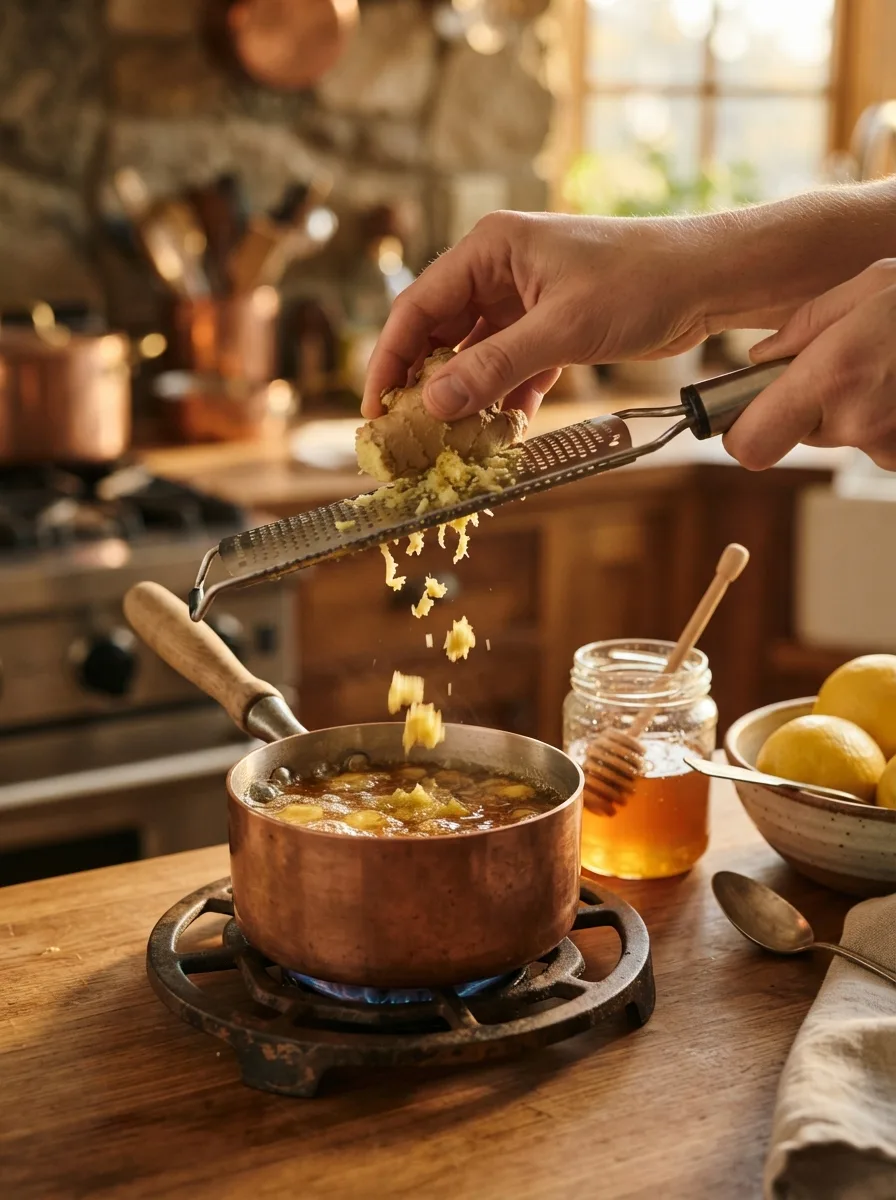
Make the honey-ginger syrupHoney-ginger syrupHoney syrup simmered with fresh ginger; the base of a Penicillin or Gold Rush twist. with plenty of fresh ginger. The heat is doing alcohol’s job.
Ginger brings real heat, the burn alcohol usually provides.
Cocktail recipeZero-proof recipe
Penicillin
Penicillin Tea
Blended scotch, lemon, honey-ginger syrup, and a smoky float.
Glass
Rocks glass
Method
Shaken
Time
5 min
Strength
Medium· ≈ 19% ABV
Glass
Rocks glass
Method
Shaken
Time
5 min
Strength
Zero-proof· 0.0%
Servings
Units
Ingredients (1 drink)
Garnish: Candied ginger
Method
1Shake the blended scotch, lemon, and honey-ginger syrup hard with ice.
2Strain over a large ice cube.
3Gently pour the smoky scotch over the back of a spoon so it floats on top. Garnish with candied ginger.
Ingredients (1 drink)
Garnish: Candied ginger
Method
1Shake everything hard with ice.
2Strain over a large ice cube and garnish with candied ginger.
How the swap works: Every part of the method at once: tea for tannin and body, a little smoky lapsang for the Islay float, fresh ginger for the heat, and salt for weight.
Enjoy responsibly, of legal drinking age only ·Zero-proof twin ·· 1 oz = 30 ml
Example 2: The Shrub Collins (Bite)
A shrubShrubA drinking vinegar of fruit, sugar, and vinegar; adds the bite zero-proof drinks miss. is fruit preserved with sugar and vinegar, an old-fashioned “drinking vinegar.” The vinegar hits the back of the throat exactly where alcohol does, so a shrub soda tastes surprisingly boozy.
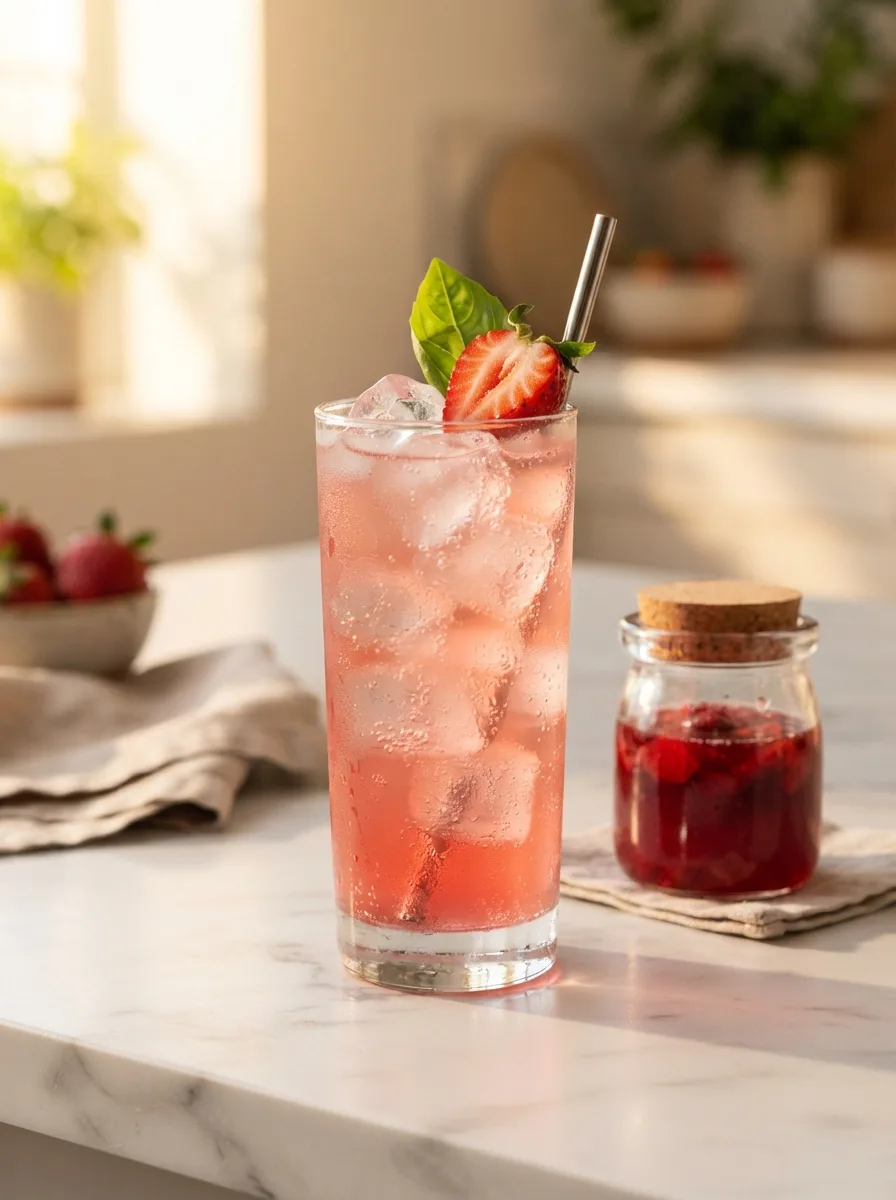
The Shrub Collins: a drinking vinegar gives the bite alcohol would.
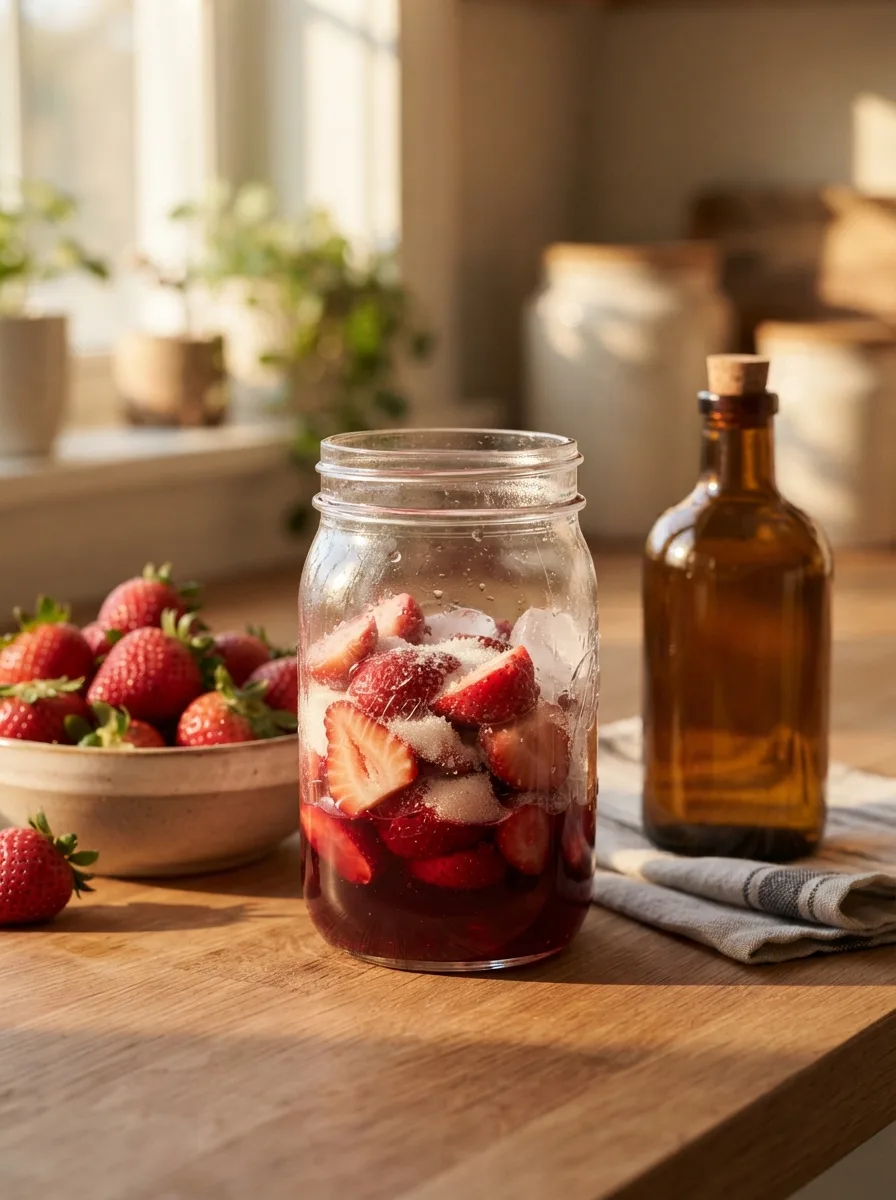
To make one, slice fruit, cover with an equal weight of sugar, leave overnight, strain, and stir in an equal volume of vinegar (apple cider or red wine vinegar). It keeps for weeks.
Shrub: fruit, sugar, and vinegar. Make it once, use it for weeks.
Cocktail recipeZero-proof recipe
Strawberry Shrub Collins
Strawberry Shrub Soda
Gin, strawberry shrub, lemon, and soda.
Glass
Collins
Method
Built in glass
Time
3 min
Strength
Light· ≈ 9% ABV
Glass
Collins
Method
Built in glass
Time
3 min
Strength
Zero-proof· 0.0%
Servings
Units
Ingredients (1 drink)
Garnish: Halved strawberry, basil leaf
Method
1Fill a collins glass with ice, add everything but the soda, and stir.
2Top with soda and garnish.
Ingredients (1 drink)
Garnish: Halved strawberry, basil leaf
Method
1Fill a collins glass with ice, add everything but the soda, and stir.
2Top with soda and garnish.
How the swap works: Shrub's vinegar gives a sharp, lingering bite at the back of the throat, the same place alcohol hits. Basil adds the aromatics gin would.
Enjoy responsibly, of legal drinking age only ·Zero-proof twin ·· 1 oz = 30 ml
Example 3: The Verjus Spritz (Wine Without Wine)
verjusVerjusPressed juice of unripe grapes: gentle, wine-like acidity for zero-proof drinks. is the pressed juice of unripe wine grapes. It has wine’s acidity and grape character with no fermentation. Mixed with a little white grape juice and soda, it’s the closest thing to a white wine spritzer you’ll find at 0.0%.
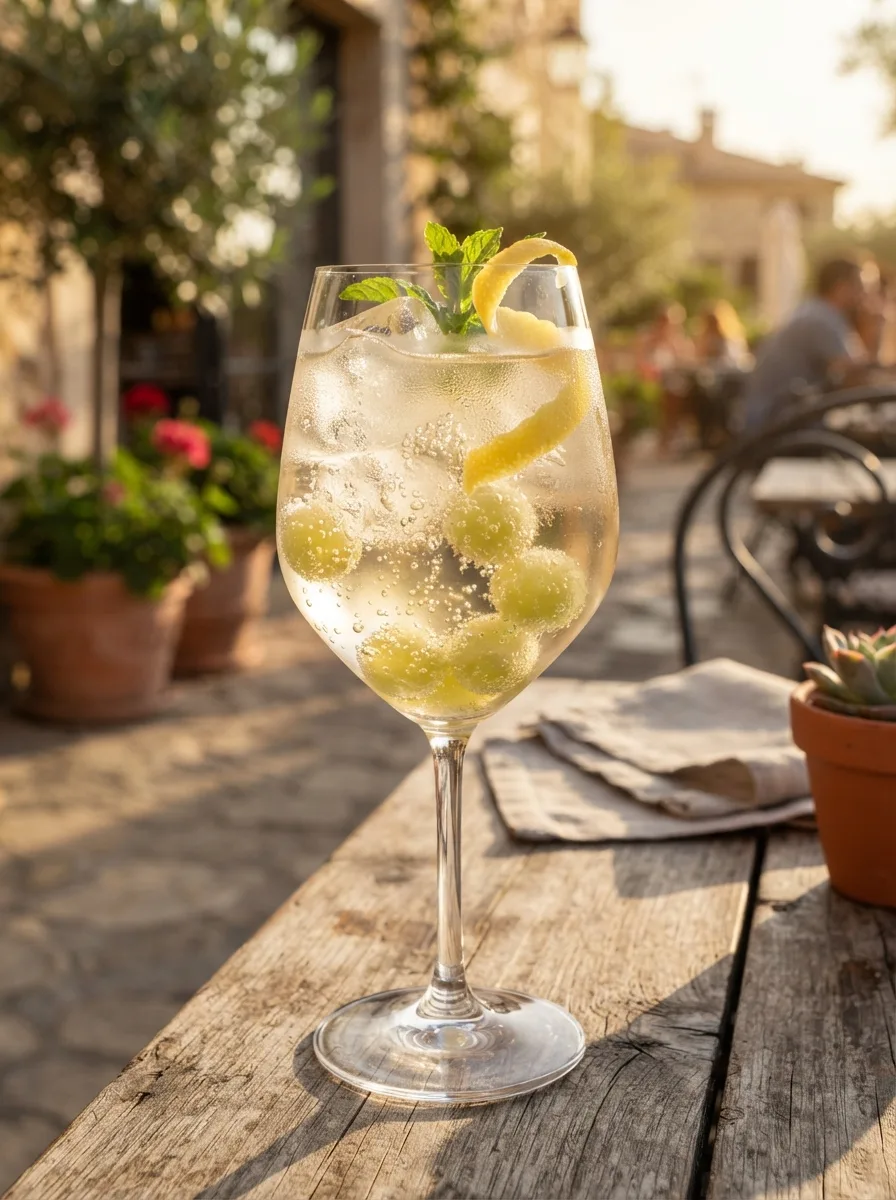
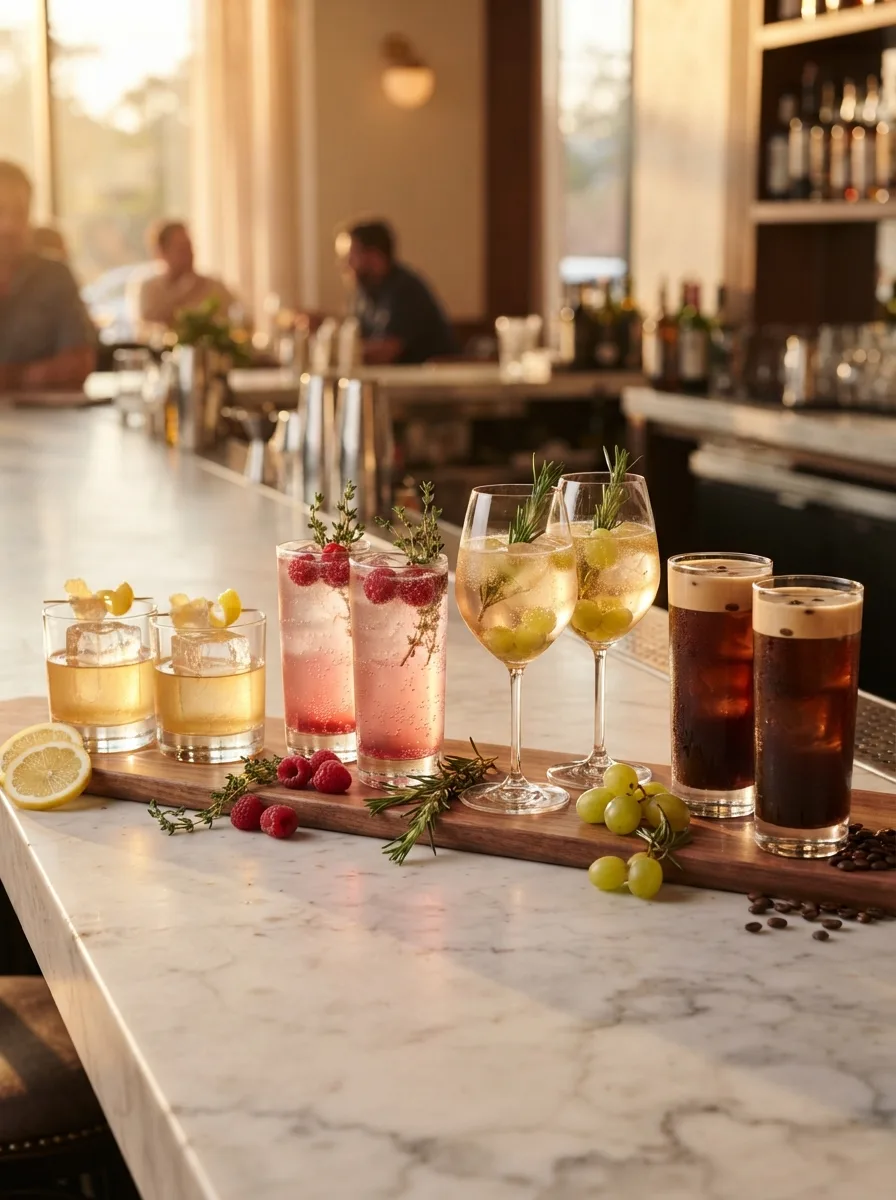
The Verjus Spritz: unripe grape juice tastes remarkably like white wine.
Cocktail recipeZero-proof recipe
White Wine Spritzer
Verjus Spritz
Dry white wine and soda with a lemon twist.
Glass
Wine glass
Method
Built in glass
Time
2 min
Strength
Light· ≈ 7% ABV
Glass
Wine glass
Method
Built in glass
Time
2 min
Strength
Zero-proof· 0.0%
Servings
Units
Ingredients (1 drink)
Garnish: Lemon twist, frozen grapes
Method
1Fill a wine glass with ice, add the wine, and top with soda. Garnish with a lemon twist and frozen grapes.
Ingredients (1 drink)
Garnish: Lemon twist, frozen grapes
Method
1Fill a wine glass with ice, add the wine, and top with soda. Garnish with a lemon twist and frozen grapes.
How the swap works: Verjus is the pressed juice of unripe wine grapes: the acidity of wine without the fermentation. Mixed with a little sweeter grape juice, it's startlingly wine-like.
Enjoy responsibly, of legal drinking age only ·Zero-proof twin ·· 1 oz = 30 ml
Example 4: The Espresso Tonic (Bitterness)
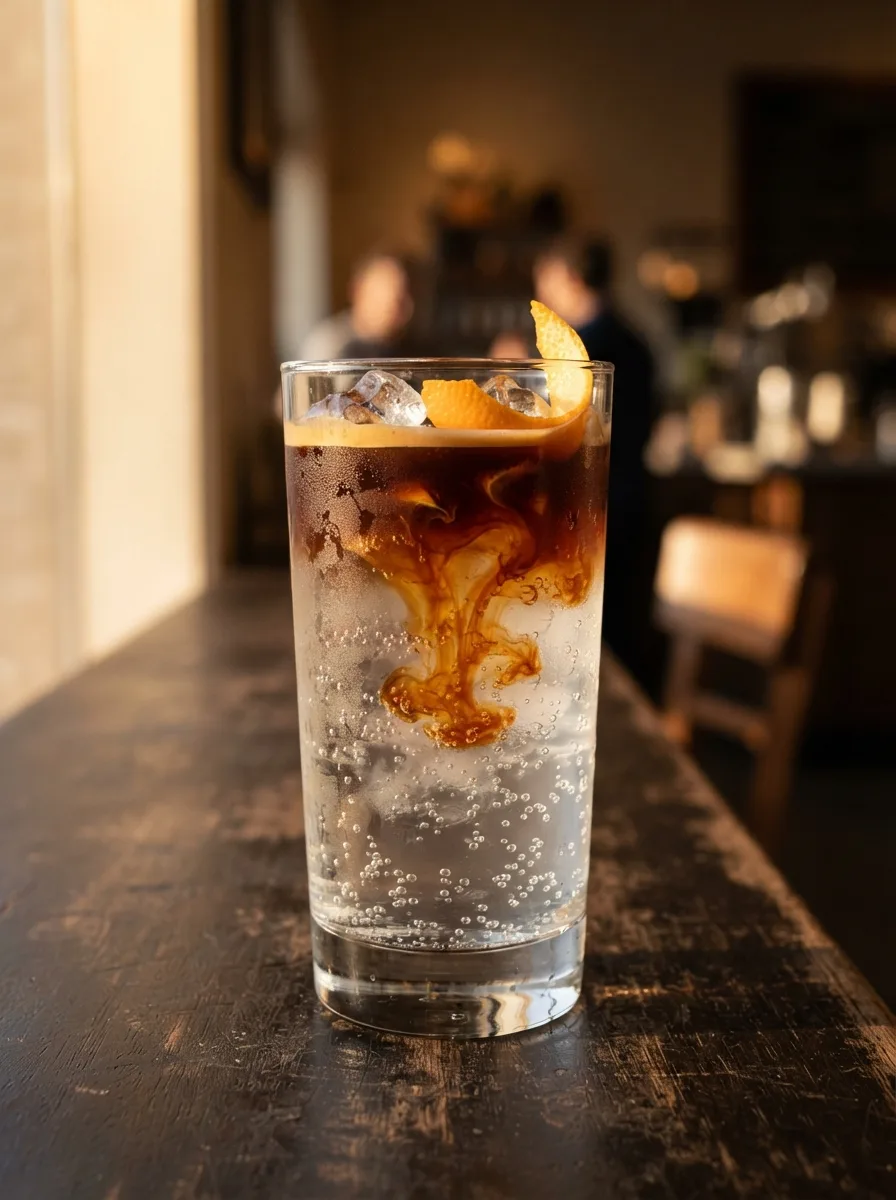
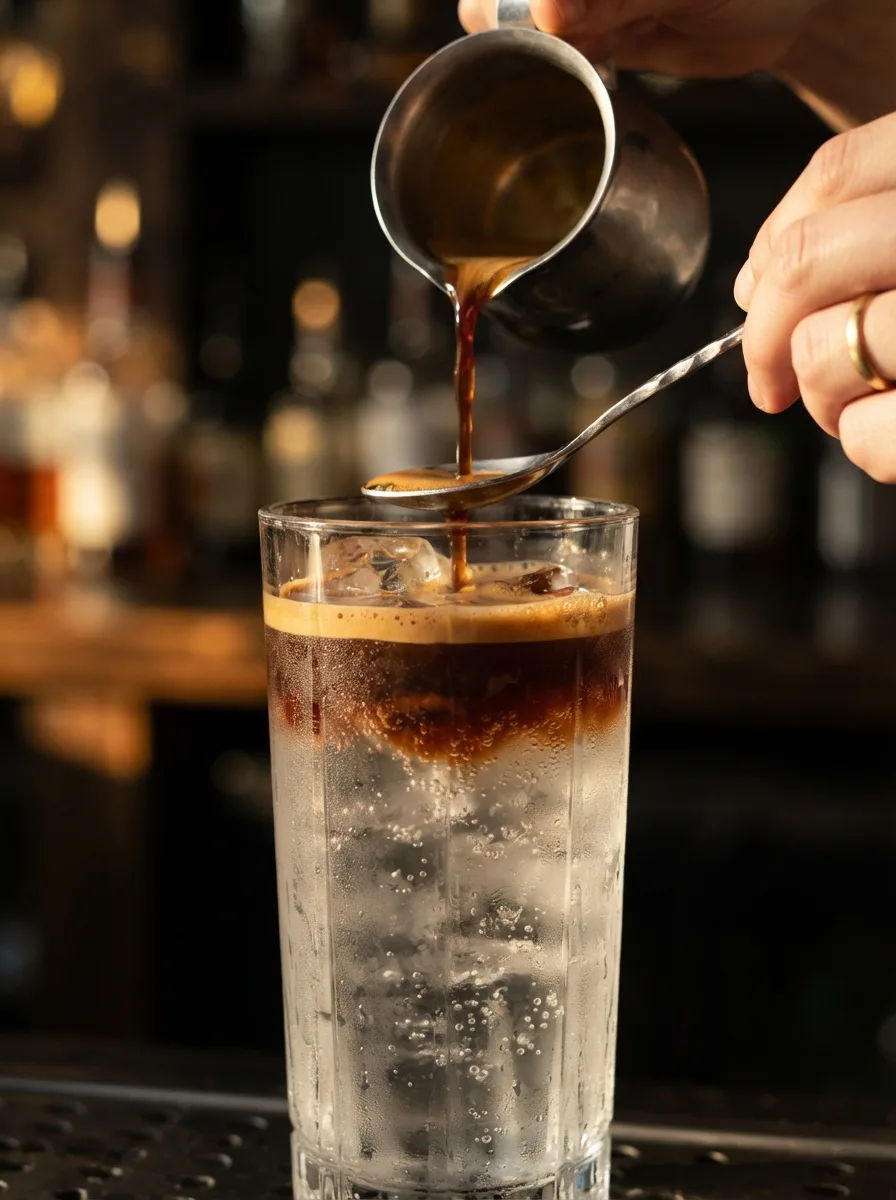
Bitterness is what makes a drink feel grown-up. Here, quinine from tonic and roasted bitterness from espresso stack up, with just enough sweetness to balance. Pour the espresso slowly over a spoon for the layered look.
Pour the espresso slowly over a spoon for the layered look.
Cocktail recipeZero-proof recipe
Spiked Espresso Tonic
Espresso Tonic
Coffee liqueur and tonic under a float of fresh espresso.
Glass
Highball
Method
Built in glass
Time
3 min
Strength
Light· ≈ 3% ABV
Glass
Highball
Method
Built in glass
Time
3 min
Strength
Zero-proof· 0.0%
Servings
Units
Ingredients (1 drink)
Garnish: Orange peel
Method
1Fill a tall glass with ice, add the coffee liqueur, and pour in the tonic.
2Slowly pour the espresso over the back of a spoon so it floats. Garnish with an orange peel.
Ingredients (1 drink)
Garnish: Orange peel
Method
1Fill a tall glass with ice, add the coffee liqueur, and pour in the tonic.
2Slowly pour the espresso over the back of a spoon so it floats. Garnish with an orange peel.
How the swap works: Bitterness is the point here: quinine plus espresso. A little syrup replaces the liqueur's sweetness, and the orange peel lifts the aroma.
Enjoy responsibly, of legal drinking age only ·Zero-proof twin ·· 1 oz = 30 ml
Finish Like a Bartender
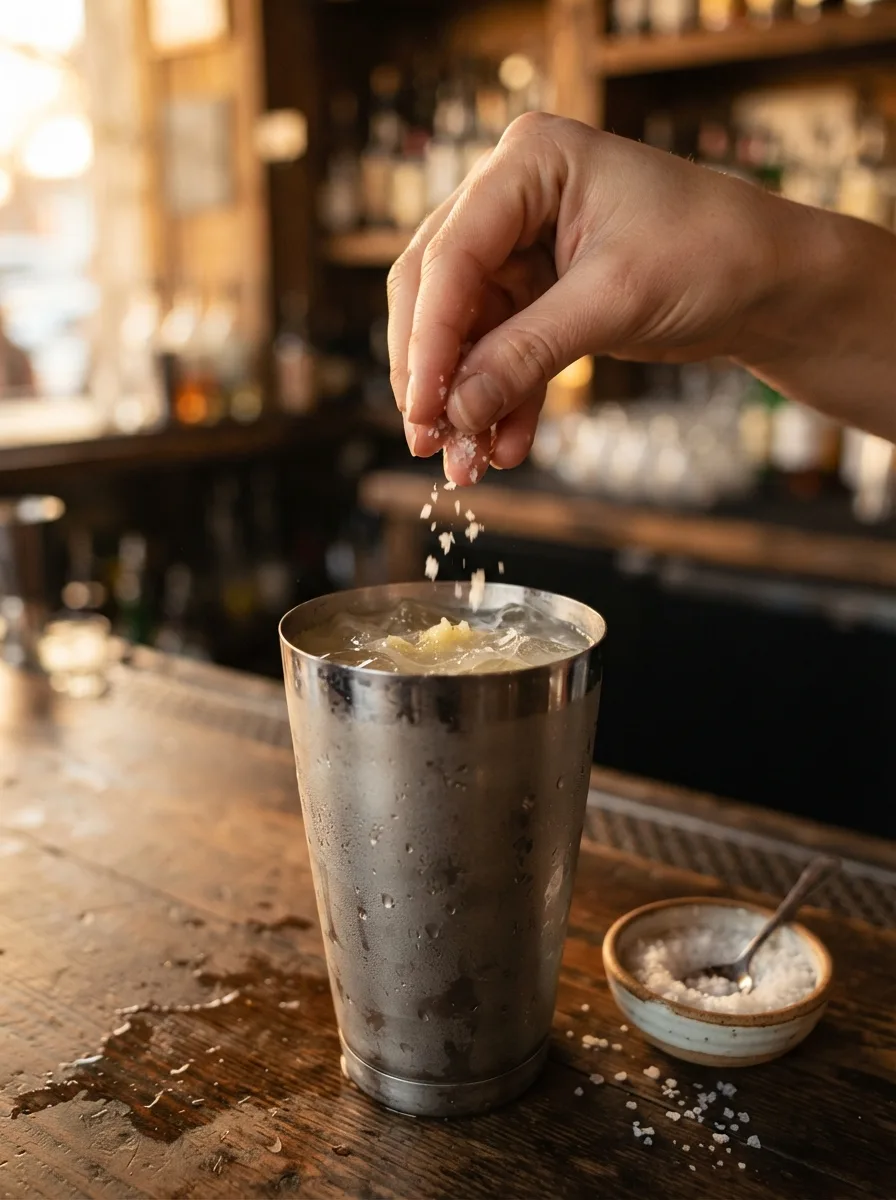
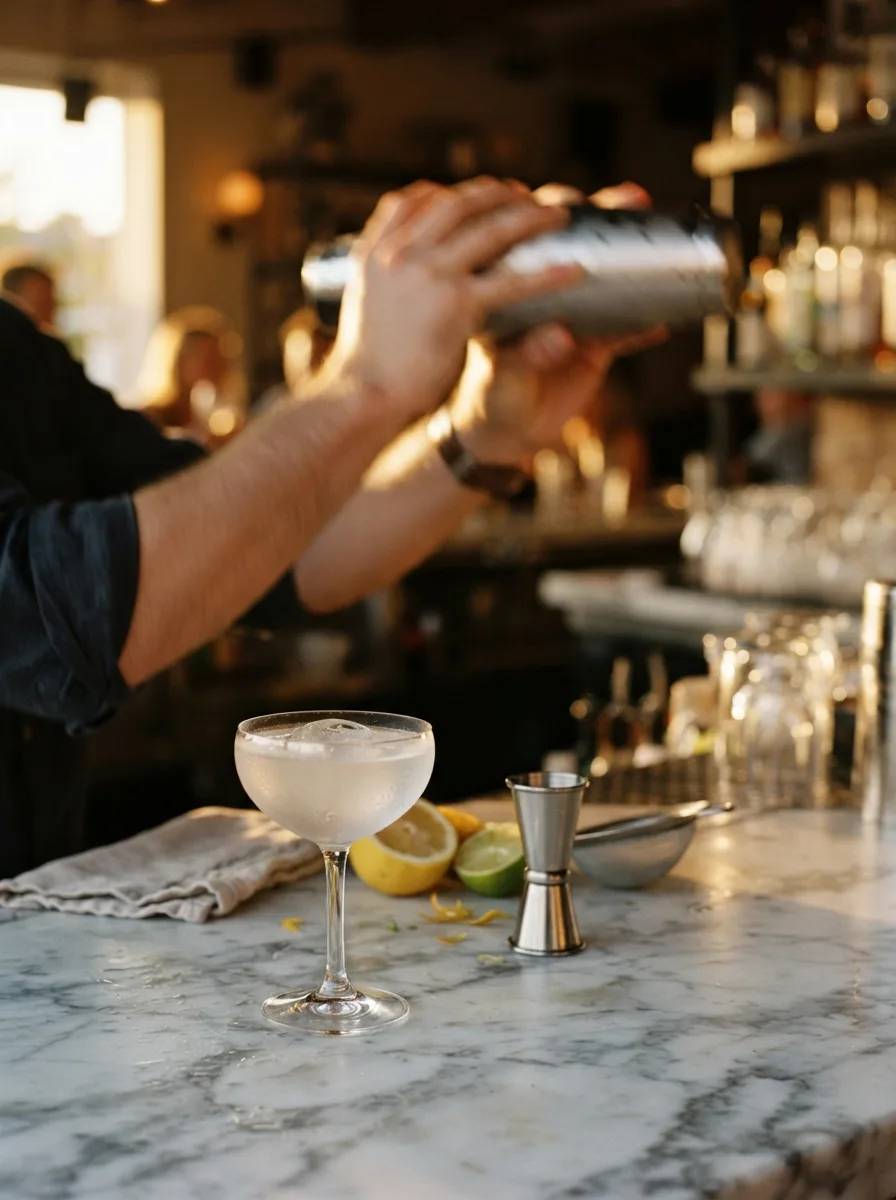
Treat a mocktail exactly like a cocktail: measure with a jigger, shake or stir with plenty of ice, strain, and garnish. The dilution, the chill, and the aroma of a fresh garnish matter as much without alcohol as with it. And add a pinch of salt.
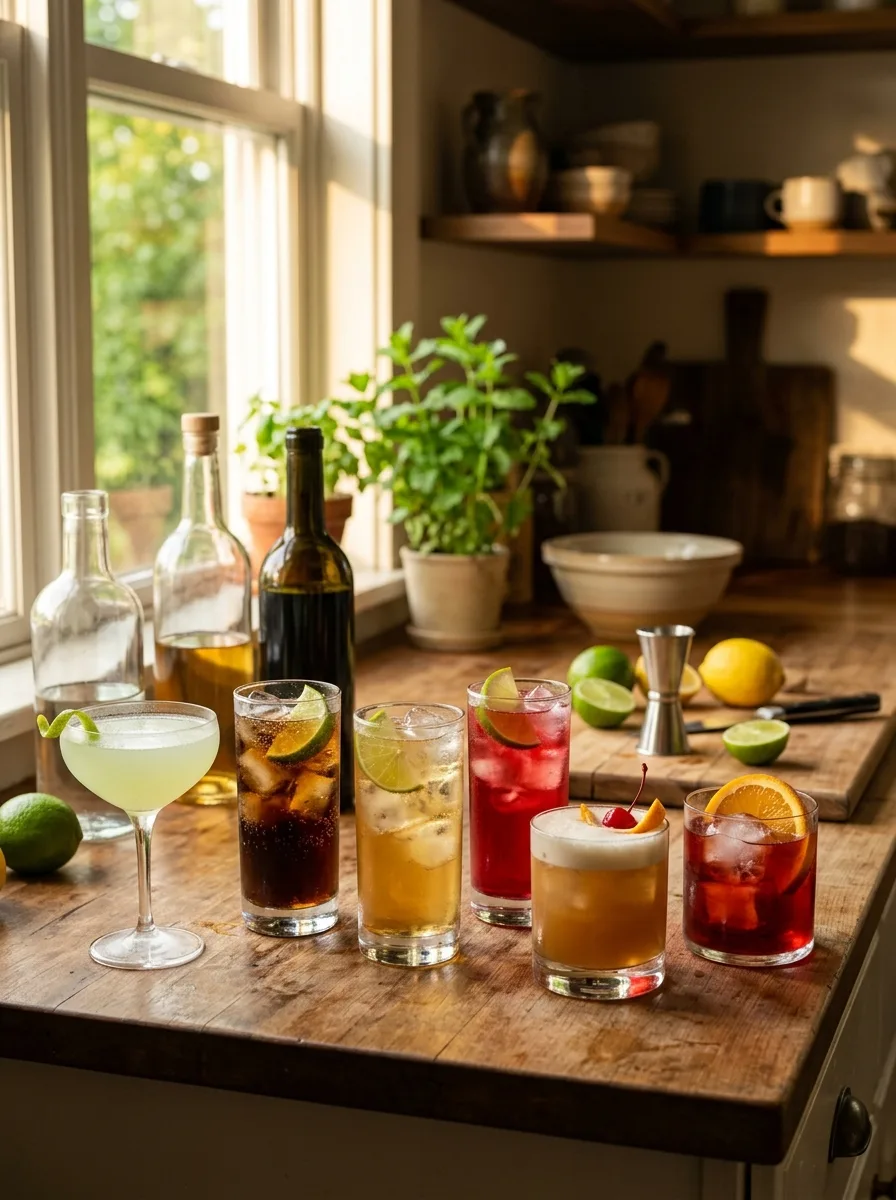
Treat a mocktail like a cocktail: measure, shake with plenty of ice, strain, garnish.
Where to Go Next
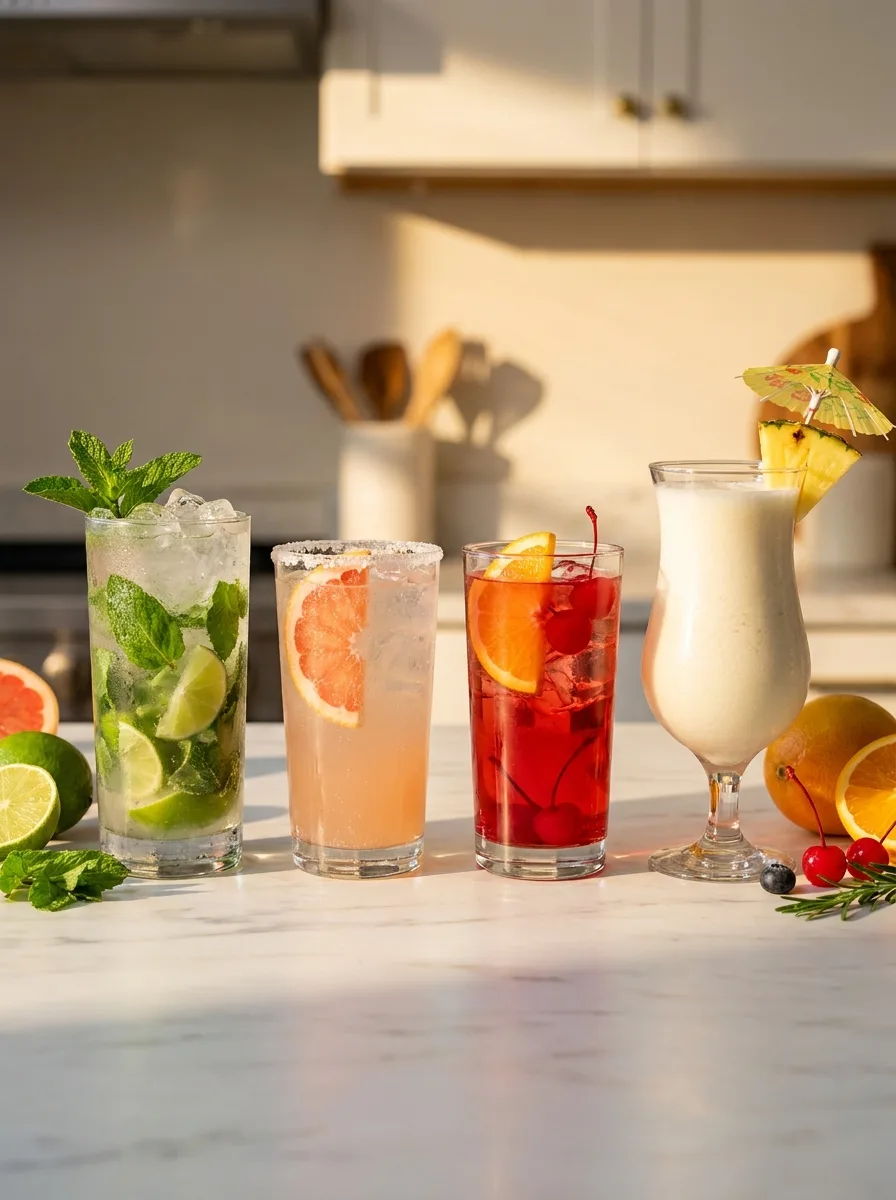
Try the method on the everyday classics in our easy mocktail recipes, or pick any cocktail on the site and tap 🌿 Mocktails to see its twin. Browse the zero-proof building blocks in the bar glossary, and learn to make the syrups that power them.
Rebuild what alcohol does: heat (ginger, chili, pepper), bitterness and dryness (tea, tonic, grapefruit, non-alcoholic bitters), body (tea, a little extra syrup, coconut water, aquafaba), acidity (citrus, verjus, shrub), and aroma (herbs, citrus peel, smoke). Then add a pinch of salt.
What can I use instead of alcohol in cocktails?
Strong black or smoky tea is the most versatile, one-for-one. Verjus replaces wine and vermouth, shrubs give a boozy bite, tonic replaces bitter liqueurs, and non-alcoholic spirits work where the spirit is the whole drink (like a martini).
Are non-alcoholic spirits alcohol-free?
Most are under 0.5% ABV, which is legally 'non-alcoholic' in many countries but not zero. Our recipe cards mark drinks that use them as 'under 0.5%'; everything else is 0.0%.
Why do my mocktails taste like juice?
Too much sugar and no structure. Cut the juice, raise the citrus, add tea or tonic for bitterness, and lengthen with dry soda instead of sweet soda. Shake with ice and strain like a real cocktail, and add a pinch of salt.
Nearly. Sours, highballs, spritzes, and punches convert easily. Spirit-only drinks (martini, old fashioned) are hardest; they need strong tea or a non-alcoholic spirit to have enough backbone.